HERE’S THIS MONTH’S collection of short takes on generally off-track activities that have gone/will go a long way towards shaping the way the sport is headed.
Change Of Direction For McLaughlin-Levrone
Fans hoping to see Sydney McLaughlin-Levrone going after the 400 WR that she missed by just 0.18 last season will have to be patient. The 26-year-old superstar will be taking the ’26 campaign off for the best of reasons. She and husband Andre Levrone announced on Instagram that they are expecting a baby.
“Made a human with my favorite human. Oh, how we have prayed for you… and the Lord has answered!! You are our greatest blessing and are already so loved. We are eagerly waiting to meet you! Cool parents loading…”
No word on a planned timeline for SML’s return to the sport. Already the winner of 9 global golds, 4 of them Olympic, she has until the ’27 Worlds before she might be on the line for another one.
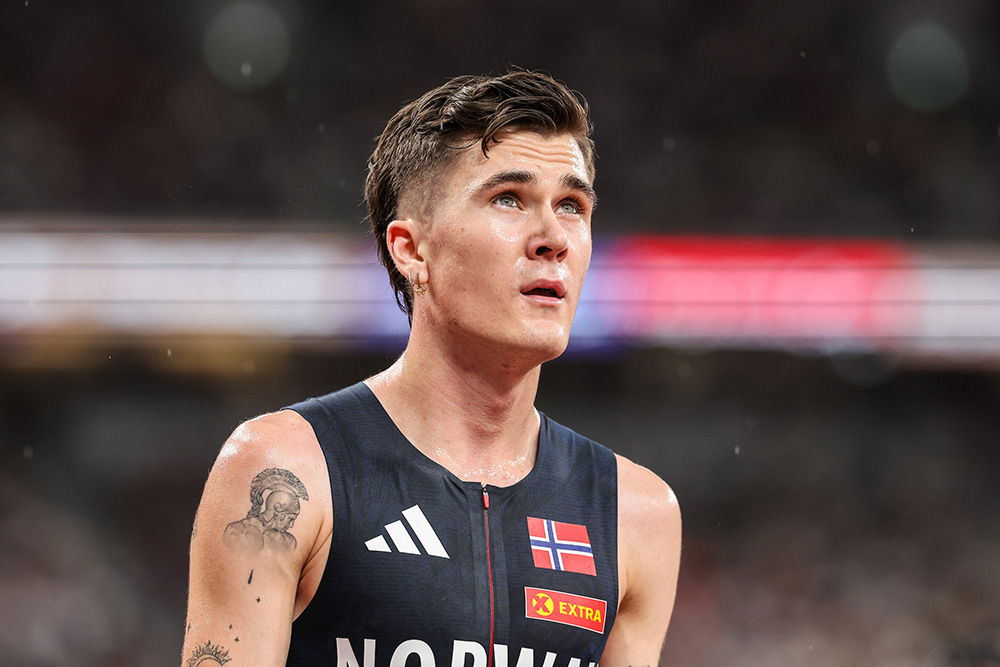
A Cautious Approach For Ingebrigtsen
Jakob Ingebrigtsen still has lofty goals in the sport, but after a year bedeviled by Achilles issues, the Norwegian superstar is approaching the ’26 season in guarded fashion. More so now that he underwent Achilles surgery in the U.S. in January, a procedure he says went “smoothly.”
Prior to the operation he told The Guardian, “The Achilles is very good. But because of the last couple of years, I am a little bit more cautious. So I am prioritizing my fitness towards the outdoor season.
“I will probably start at the Bislett Games in June. But my goals are to get double gold at the European championships, a Diamond League Final victory, and to make one good World Record attempt in the 1500, the mile and also the 5000.
“My 2025 season was a great setback in terms of my career. But I’m still highly motivated. Let’s say I can have 10 more years from now. If I can do that, then I think I have a good chance of reaching my ultimate goal.”
Troubles With The Drive Phase
Sha’Carri Richardson and Christian Coleman found themselves in the headlines recently, just not the ones they wanted. Richardson was driving a car (a pricey Aston Martin) that was pulled over near Orlando, Florida, for going 104mph (167 kph) in a 65 zone. The police report said she was also changing lanes, flashing lights, and driving too close to other cars.
Richardson reportedly told police she was driving that speed because a back tire was underinflated. Minutes later, a vehicle driven by her boyfriend, Coleman, pulled in front of her car, and Coleman began defending her driving to the police. Training partner TeeTee Terry arrived in a third car, and the two began talking to Richardson. They were both cited by police for stopping on a limited access highway. Terry soon left.
Coleman, however, refused to identify himself. He was charged with driving on an expired registration, resisting an officer without violence, and possession of drug paraphernalia after police found a glass smoking bowl in his car with plant matter stuck to it. Both he and Richardson were taken into custody then released after posting bond. Both have pled not guilty.
Back To The GST Drawing Boards
The bankruptcy plan to resuscitate Michael Johnson’s Grand Slam Track venture ran into serious roadblocks in late January. GST’s backers had hoped to go slow on paying athlete debts incurred in ’25, while budgeting $400,000 to land new athlete commitments for ’26.
Not so fast, said the Association Of Athletics Managers, which released a statement expressing shock that GST was planning to continue while withholding payments to athletes. “The AAM does not support this approach.”
Neither does World Athletics, which followed with a stinging condemnation: “It is unconscionable that efforts would be made for Grand Slam Track to restart in 2026 without the settlement of outstanding financial obligations to athletes, vendors and service providers. It is paramount that athletes who competed in good faith and vendors and service providers are treated fairly and paid.”
WA added that there would be no licensing or supporting of GST until all its debts are paid. Among the smaller debts GST owes is $19,000 to former USC hurdler Eric Edwards, who has no sponsor and puts in his training before a 10-hour shift at Amazon. He has had to move back to Houston to live with his family. “The 15th-best hurdler in the world can’t even pay rent,” he told ABC.
Kerley Charges Dismissed
Former world champion Fred Kerley, in the twilight of his career at age 30 after signing with the Enhanced Games, now has one less trouble to worry about. The domestic violence charges that he faced after a January ’25 arrest have been officially dismissed. The charges were filed by his ex-wife and originally stemmed from an argument they had the previous year.
Said Kerley’s lawyer, Richard Cooper, “I’m happy to report that the case was dismissed due to an utter lack of evidence and good faith to proceed by the prosecutor. My client could never and would not hurt a woman, especially the mother of his children. My client is looking forward to focusing on winning races and inspiring people around the world.”
Kerley later posted, “They put me through hell, but truth walked me home. Cases dismissed. Blessing on blessings.”
Make That A Large Slice
With the kind of money that the IOC has around, it’s no surprise that the many federations under its umbrella are interested in getting a bigger slice of the pie. The Association Of Summer Olympic International Federations has released its strategic plan for 2026–32.
Among the items on the ASOIF wish list is the “establishment of a clear and objective process and methodology for determining the Olympic Games Sport Programme” as well as the clarification of “Olympic Games revenue distribution based upon transparent and objective criteria.”
The IOC generated up to $4.62 billion in revenue from the Paris Games, a figure which includes $3.25 billion in TV revenue. The entire 4-year cycle was good for $12.4 billion. According to Olympic journalist Rich Perelman, about 74% was distributed (not the 90% the IOC often claims) to Olympic organizing committees, national Olympic committees and international federations. The 4-year slice that went to ASOIF federations was $590.1 million (12.8%).
Fitzgerald-Mosley Leading SafeSport Reboot
The U.S. Center For SafeSport has weathered various controversies in the 9 years of its existence and is hoping that under new leadership the organization can finally make solid progress toward its goals. The new CEO is a familiar name to track fans, Benita Fitzgerald Mosley, who won gold in the 100H at the LA Olympics in ’84.
In recent years, SafeSport has been racked with lawsuits and allegations that it exists to provide PR cover for the USOPC, from which it gets most of its funding. One gold medalist, now lawyer, characterized it as “defendant-friendly.”
Says Fitzgerald Mosley, “As an athlete, I felt safe, supported and strengthened in my career, and I am committed to helping all the athletes within the Olympic and Paralympic movement feel that same sense of support.
“While the Center has moved the needle on athlete safety nationally, my vision is to ensure that we are building an organization that athletes can believe in, the staff can be proud of, and the public can trust and respect.”
When You’ve Got A Spare Million Lying Around
Suddenly, the financial outlook for America’s Olympians (all sports) has gotten a lot brighter, thanks to the biggest gift in USOPC history. Billionaire financier Ross Stevens has donated $100 million to assist Olympians — a group that has often drained savings to train — with the costs of retirement and later life.
Starting with the ’26 Winter Olympics and going at least through the ’32 Games, every competitor on the U.S. Olympic teams will be granted $200,000 in benefits. The first $100,000 they can access 20 years after their Games or at age 45, whichever comes later. They can use this money for any purpose. The second $100,000 will provide a guaranteed benefit for their beneficiaries upon their death. Athletes who compete in multiple Games will get the benefit for each Games, for a multiplier effect.
Says Stevens, “The Olympic and Paralympic Games are the ultimate symbol of human excellence. I do not believe that financial insecurity should stop our nation’s elite athletes from breaking through to new frontiers of excellence.” ◻︎
