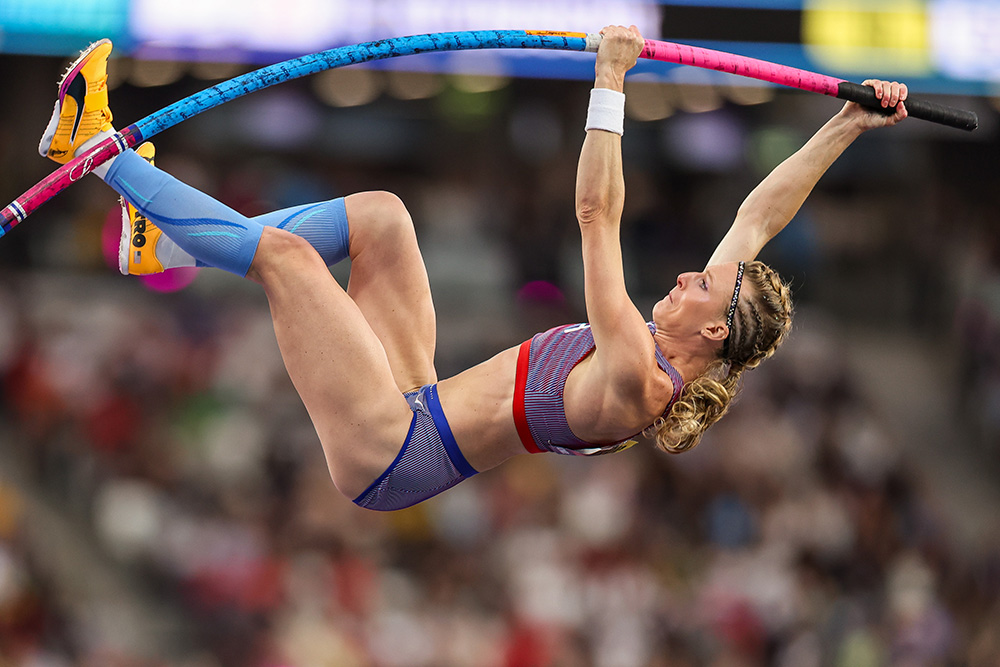
FEW ATHLETES in our sport have proven as resilient as Sandi Morris. The South Carolina native, now 34, is still battling for the top honors in her event more than a decade after winning her first medal, the silver, at the 2016 Olympics. Most of her competitors on that day, as well as most of her USA teammates from Rio, have since retired.
The relentlessly positive Morris, however, seems to be getting better and better. Over the summer she won her sixth USATF outdoor crown, and she captured the season-ending global title at the inaugural Ultimate Championship, both with her highest vaults in the last 6 years. The turnaround, she explains, came after the disappointment of missing the ’24 Olympics, when she reevaluated everything and moved to Louisville to work with vault guru Brooke Rasnick.
Her personal life remains rich. She just celebrated her seventh anniversary with husband, Bermuda Olympian Tyrone Smith. And in her move to Louisville, she did not leave behind the “Sandi City Zoo” which currently includes two Italian greyhounds, one gecko, two birds, a tortoise, and three snakes. Horses (“I grew up riding”) will have to wait for “when I’m not traveling the world for 100 days a year.” (Continued below)
Then there’s the music. “I play violin, I play guitar, I’m working on a couple songs right now because I do want to get in the studio and get some more music out there to the world, but again, I think that’s just one of my many hobbies and my many, ‘somewhat’ talents.”
She stepped away from her keyboard (she plays that, too) and generously shared her time with us as she begins training again. She says her Budapest win marks “the beginning of something new” and the excitement in her voice is unmistakable.
T&FN: So how did it feel to wrap up your season with the Ultimate Champs win?
Morris: Oh man, there’s a lot to unpack, but you know, I’ve had such a storied career and finally, I have just ticked a box that I have been trying to tick off my list of achievements for a very, very long time. It feels surreal, like, oh my gosh, I actually finally did it and I don’t know how to put into words everything that I have been through over the last few years.
I talk frequently about how every athlete has their own journey and things that they’re dealing with behind the scenes and it’s really insanely difficult to be at the top of your game over a very, very long period of time. So it was always expected that good years would come and bad years would come and that I would always just continue to push through and find ways to get better and better. There were a couple of years where I plateaued and I was questioning, like, “What do I need to do? Am I still capable of getting better and how do I improve?” And so I’ve been on this mission to figure out the formula for my coaching, training, the situation I need around me, like, what do I actually need to work on in my jump?
After missing the Olympic team in ’24, that was when I really went back to the drawing board and was like, OK, we’re doing a full clean out here with my training and everything around me, really evaluating and being very intentional about what I’m going to do because I know that I only have a limited number of years left and as I get closer and closer to the end, I have more of a fire lit under me to get back to work. I’ve always been that way, though. I’ve always been like, I want to grind, I want to grind, I want to grind, but there’s intelligent ways to grind and then there’s just grinding for the sake of grinding.
I finally just found a lot of things in my training that have really helped me get to being the best that I’ve ever been, even into my 30s. I think it’s really cool that we are pushing the limits on when are you actually truly in your prime. Because I’m 34 and I’m finally reaching my prime, reaching my prime mental game and physically I’m stronger than I’ve ever been, I’m as fast as I’ve ever been. Seeing that finally all pay off and going out there and executing it, that’s the best execution I’ve ever pulled off at a championship and it was all intentional. I went out there and like a laser, just bam, bam, bam, everything that I wanted to do, execute, execute, execute, and that’s how I finally came away with this title.
I’m back home now and I’m starting my prep for 2027 and I’m not done yet and that’s what is so exciting to me. Just talking about this, I’m getting myself all fired up because I know there’s even more in the tank and things that maybe I had lost hope in, like, OK, can I still jump over 5-meters again? Can I still break the World Record? I now know, yes, I can still do these things and now I feel like I finally have the tools to actually do it.
T&FN: You got just a little over 13-feet in high school. Would your 17-year-old self be shocked that you’re still flying over bars?
Morris: My 17-year-old self would definitely be shocked because there’s this expectation of how long athletes are expected to go. I’ll put it this way. I never didn’t think I could go as far as I have gone. But I wasn’t sure how far I would go. And you just keep going and keep going. And year after year, I’m like, OK, getting better, getting better. I’m still here. I’m still here. And you just take it as the years come along. But my 17-year-old self would not have been thinking, “Oh, yeah, at age 34, I’m going to be still vaulting and be one of the best pole vaulters in the world at that age.” That’s crazy.
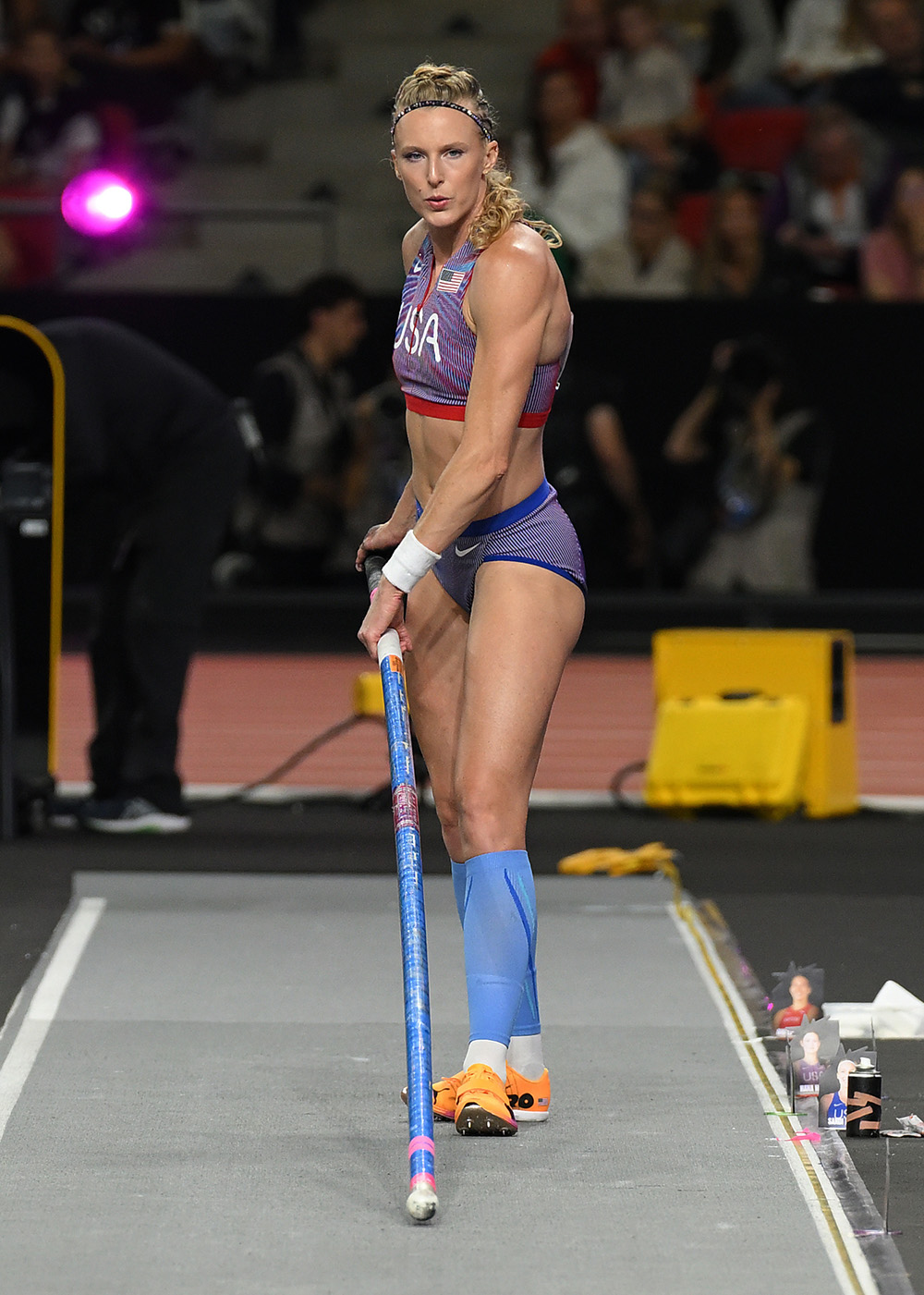
T&FN: Was there ever a moment of frustration with your event where you thought, “Shoot, I should have just stuck with the hurdles?”
Morris: I would also have a tough hand of cards in the hurdles to deal with, because that’s a really, really tough event as well. But I will say that I miss the hurdles.
I think back to the good old days of running the hurdles and getting to vault back in high school. It was a lot of fun. And so I think that finding ways to keep training fun and come up with new ways to keep things interesting is fun. But I would love to revisit hurdling maybe once I’m a retired pole vaulter and just want to play around with something else. But I also don’t know if I want to see my time in the hurdles.
But it would be fun. It would be fun. I think about doing maybe the master’s decathlon when I’m done, but I’ll see how my body feels.
T&FN: You’ve spent most of your life now as an elite vaulter. What’s the most important thing you’ve learned about yourself during this unique career?
Morris: I think it’s so important to never doubt yourself. And don’t let doubt creep in and kill reality. Because the reality is, I’ve always been the vaulter that I believed I could be. And there were years that that doubt held me back. I wasted a lot of time and energy on doubt. And so I’ve made a promise to myself that I will never doubt myself again, ever, no matter what it is.
And don’t be afraid to shoot for the stars and pick up new things. If I’ve learned anything about myself, it’s that I used to be afraid when I was a kid of being bad at things. And I feel like that’s a very common thing for people in general.
What I’ve learned is embrace the suck. Like if you suck at something, embrace it, and practice and you will surprise yourself. You can get so you can get considerably better at things just by embracing the suck. And so I do that in my training. And I do that in my everyday life. (Continued below)
T&FN: People challenge themselves all the time. But the difference with you is that you’re on public display when you’re challenging yourself and your fans see every miss and every make. Is that hard emotionally?
Morris: It’s definitely hard. And I think social media and being able to see the opinions of every Joe Schmo about you at the click of your finger, you can see what everybody thinks about you. And it definitely can take a toll on your psyche.
There were times where I let people get under my skin and contribute to those doubts of myself. That’s something that I’ve had to work on throughout my career. And I think that maturing as a person and being in the spotlight this long has enlightened me to the fact that everybody’s gonna have an opinion, but you have to keep your circle small. Because believe it or not, not everybody knows what the heck they’re talking about.
I just kind of roll my eyes when I see criticisms, whether it’s of me or of other athletes, and I’m like, they just don’t get it. You know, it’s really hard to understand this life that we live. It’s so intense, and it’s so focused.
And everyone on the internet can just have their opinion, willy-nilly, and then they can go about their day. And we have to remember, those of us who are in the spotlight, that their words and their opinions have absolutely no bearing. But if you want to use it as motivation to prove them wrong, then go right ahead.
And I’ve definitely taken that route as well. And that’s quite fun when you see something on the internet that’s like doubting you. And then you turn around and prove them wrong.
And it’s like, “Ha! See?”
T&FN: Is working with Brooke in Louisville a happy place for you?
Morris: It absolutely is. You know, I’ve worked with a handful of coaches. I’ve seen other coaches and how they work in the world. I’ve been amongst the best coaches on the planet. And what Brooke does at the UofL is really special.
She’s very, just really well-rounded. She really knows her stuff. She is a pole vault guru, but she won’t toot her own horn about it.
She’s very humble. And she’s very choosy about who gets to join the training group because she wants the energy to work, and for everybody to contribute to this, to the greatness of the training program. Her biggest strength is being able to curate the energy at practice by picking who is allowed to enter that circle.
And then she’s also really good at making training fun. Everything she turns into a game for the university kids. Competing with each other, but also uplifting each other. It’s a really cool thing to witness in person how she has made this culture inside of the training group. And I get to be part of that. They see me as a leader and they want to learn from me. And so it’s made me step more into my shoes of being Brooke’s assistant. And if they come to me with questions, I’m happy to talk through things and help them in any way that I can.
It has helped me grow as a person and as an athlete. And then another strength that Brooke has is just her ability to tailor programs for what each athlete needs. And I’ve never seen a coach spend more time in making each kid get exactly what they need, because not everybody needs the same thing out of their coach.
And she has done that for me as well, you know, and she has been a great partner for me. That’s what I’ve needed at this last chapter of my career: someone who will stand side by side with me at championships and be my co-captain. And we run this ship together. And it’s been a great partnership.
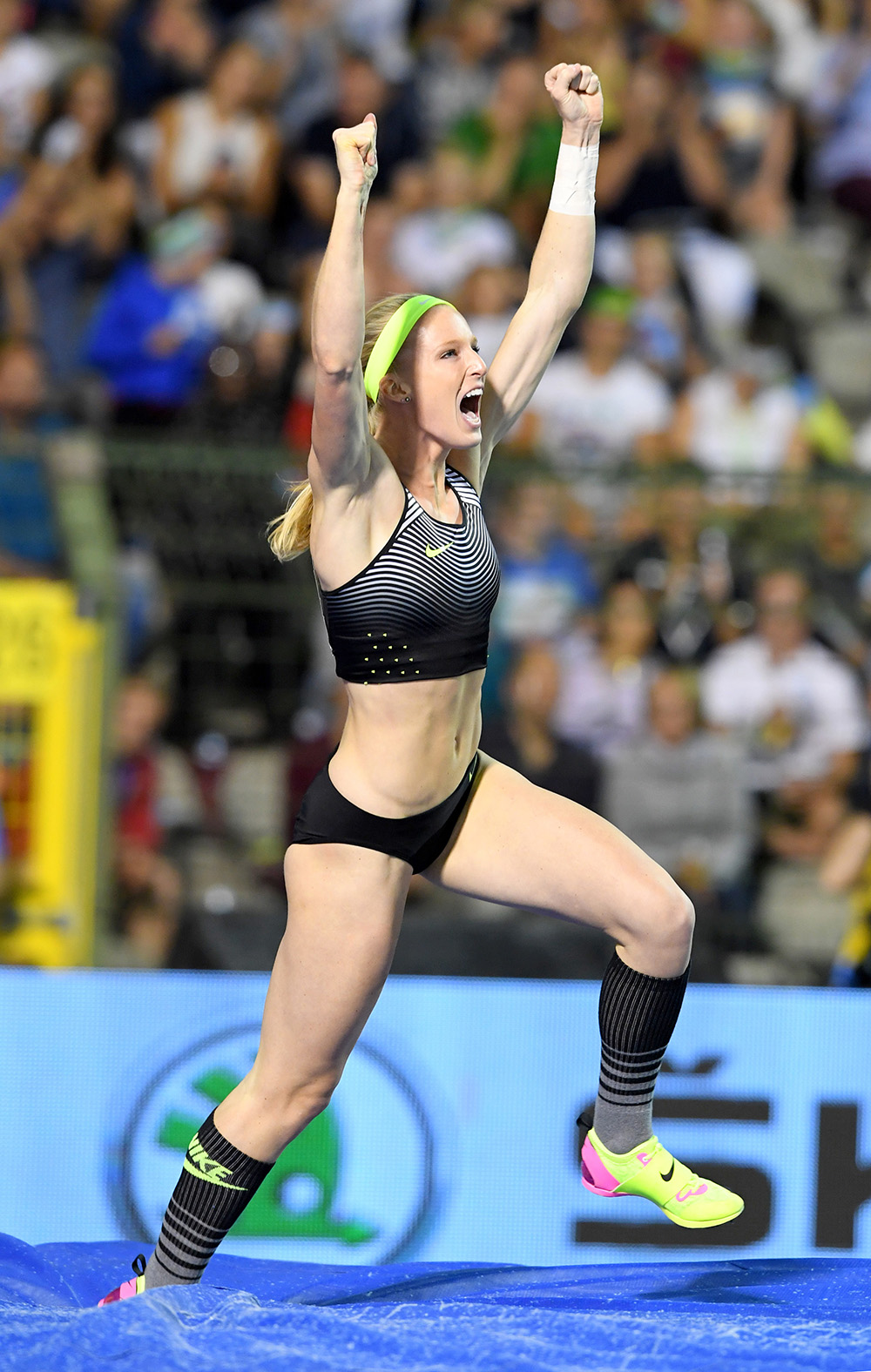
T&FN: Looking at your current situation being coached by Brooke and your current mindset that’s so effective, would that have worked if you had stumbled upon it 10 years ago or did you need to go through the frustrations to get to where you are now?
Morris: The frustrations are what built my strength and it took a long time ,but also I’m very thankful for who I’ve become in that amount of time and how strong it has made me. I think that this last chapter of my career – my plan is at least through LA, I’m not writing off maybe going longer than that, I’m going to take it one season at a time – can be the strongest of my career and that winning this Ultimate title was just the beginning of this next chapter, the beginning of something new.
T&FN: Is there any household rivalry between you and your husband? He’s got the three Olympics, and you’ve only got two.
Morris: Oh, yeah. He definitely jokes about how he’s made it to more Games than me.
And I was like, “You know, I’m not done yet here, sir.” But we definitely have some fun little rivalries here and there. And we still go out to the track together.
That’s our Saturday date: go to the track and run hills. And so we’ll race each other or he can definitely still outrun me and still jump farther than me and all those things. But I don’t know.
There’s an 8-year age gap. He’s older. So maybe there will come a time where I will overlap.
He’s like, “No, you’re never going to see that day.”
T&FN: Do you spend any time dwelling about, “If I’d only done X, I would have gotten the gold?” Or are you good at compartmentalizing past meets and focusing on the future?
Morris: Yeah, I’ve had to be very intentional about moving on. Every time something happens, I mean, whether it’s the silver medals or even just a bad practice, you have to be an eternal optimist and relentless. And I would say those two things describe me. I’m eternally optimistic.
There are things that, sure, you could worry, “Oh, maybe it won’t work out.” But maybe it will. Maybe it will. And you don’t know if you just give up now.
Also, I think that my identity with the silver medals, that is more projected onto me from the general public who has seen, Oh, she’s gotten silver year after year, whatever. I mean, I am very proud of those performances. And I’m also very proud of my two gold medals that kind of get brushed under the rug now and again for an indoor season. I’m very proud of those performances against the same badass women who I compete against every time I step out there at a championship. Those indoor golds were just as difficult, especially jumping 4.95 in Birmingham in 2018. That was a hard title to win.
So even though our sport labels certain meets as more important than others, that day, I know that that was some of the best jumping I’ve ever done in my life. And I’m like, OK, just because it happened at that meet and not another meet doesn’t mean that greatness isn’t in me.
I identify myself as a great pole vaulter, regardless of the color of my medals. And pole vaulting is also just a portion of who I am as a person. It’s something I do. It’s not really who I am.
If I want my competitors to remember anything about me, it’s that Sandi was a fighter.
She’s going to show up and she’s going to give it her all. And Sandi is human. We are all human. And so that’s what I want people also watching to remember about me is, you know, I’m a human being. And we all are. All of these athletes out here just giving it our all.
So I don’t identify with the color of my medals. I identify with my champion spirit.
T&FN: You’ve seen other vaulters come and go and you are still going strong. What’s the key to your longevity?
Morris: It’s a choice. I think that a lot of people give up too soon. There were times where… I won’t say I was close to doing that. But I considered, OK, am I just done? Like, is this just the end? And I decided to challenge that and to keep going, but not keep doing the same thing over and over expecting a different result. Really getting down to the nitty-gritty of, OK, what do I need to keep in my training? What needs to go? How do I keep reinventing myself? And I would say my motivation has come from deep within myself. I always just want to be the best I can possibly be.
I couldn’t even imagine just throwing in the towel and giving up. Someone’s gonna have to drag me off that track. □